
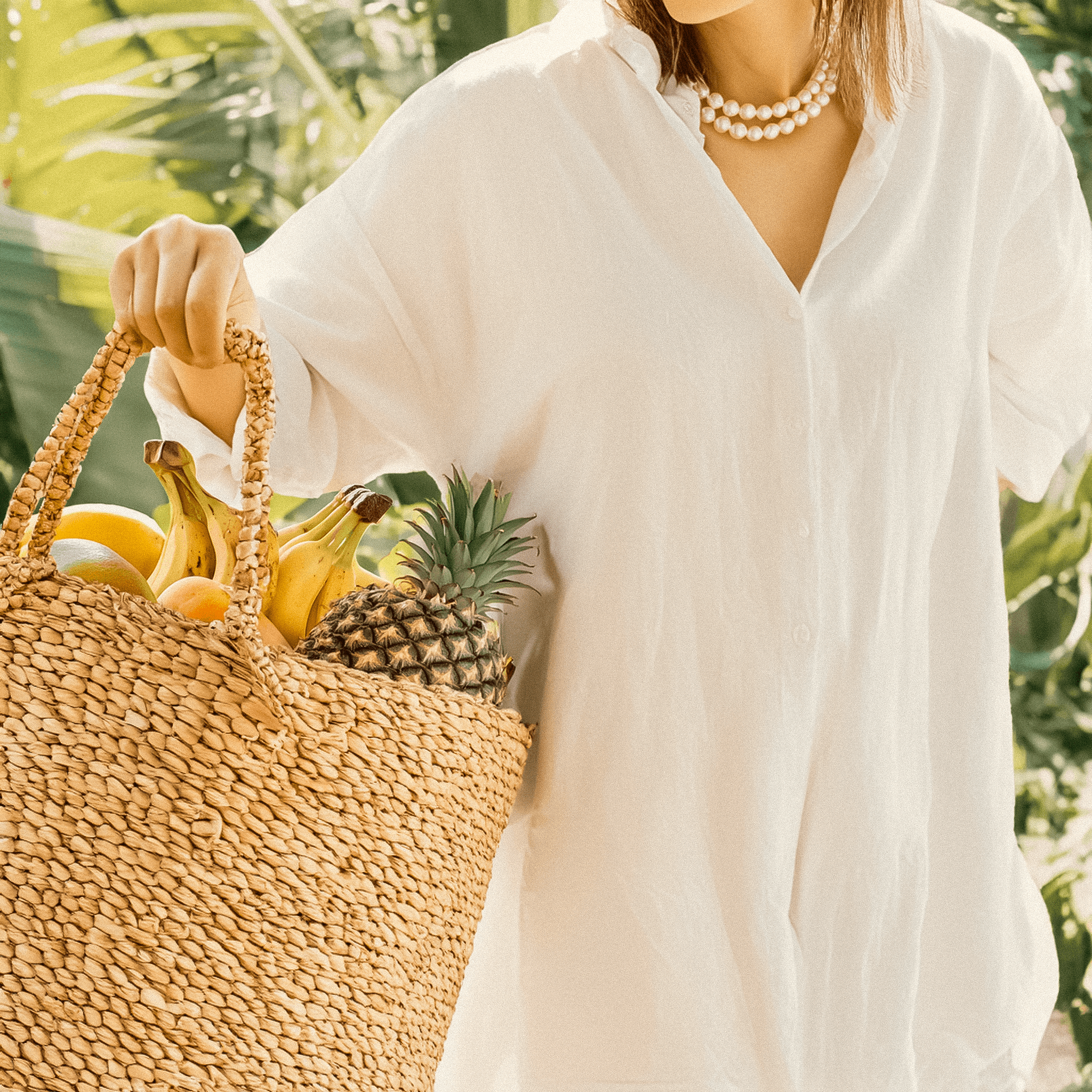
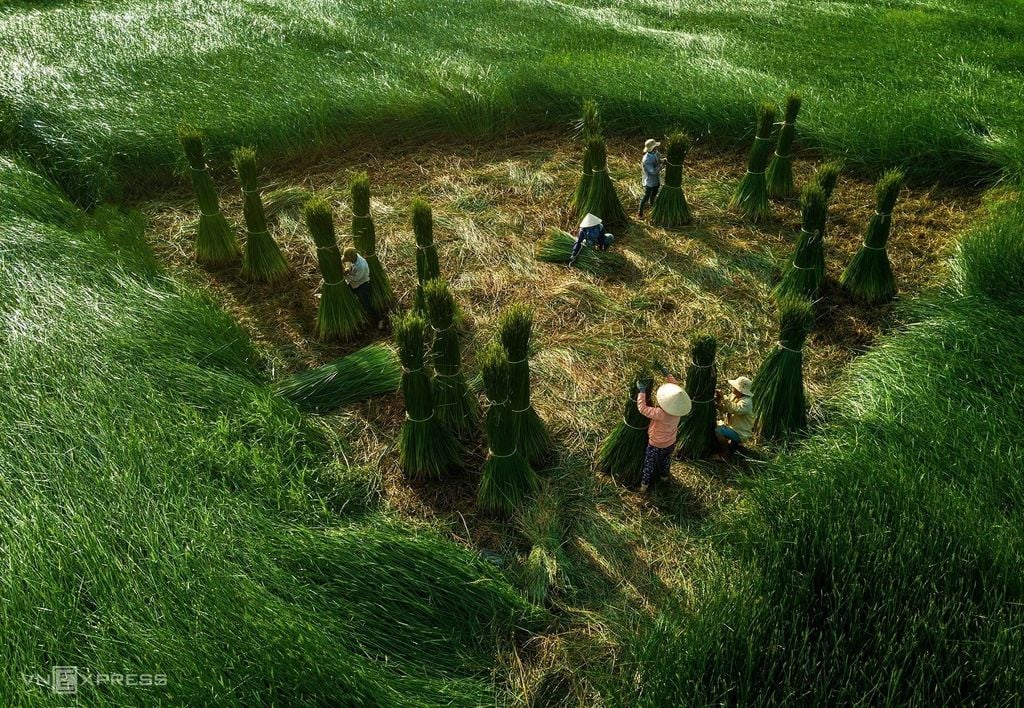
When the summer sun begins to shine brightly, people in the communes of Quang Khe, Quang Truong, Quang Xuong district (Thanh Hoa) are busy harvesting sedge.
Sedge is a plant that weaves many wonders, not only bringing unique products, imbued with cultural identity and traditional handicraft spirit typical of different cultures, but also contributing to building a green lifestyle that is more cozy and sophisticated with natural rustic sedge products.

Sedge, scientifically known as Cyperus and commonly known as sedge grass, is a herbaceous plant that thrives in wet areas. The special feature of sedge lies in its rhizome – also known as sedge tuber – which grows 0.5 to 1 meter deep below the ground, making it extremely adaptable to coastal environments. The stem is long and slender, growing straight with an average height of 1 to 2 meters. In Vietnam, you can easily find sedge in coastal strips stretching from Quang Ninh to Thanh Hoa, as well as along the South Central provinces. Currently, the two most popular types of sedge are brown sedge and white sedge, which are often used in handicraft production.
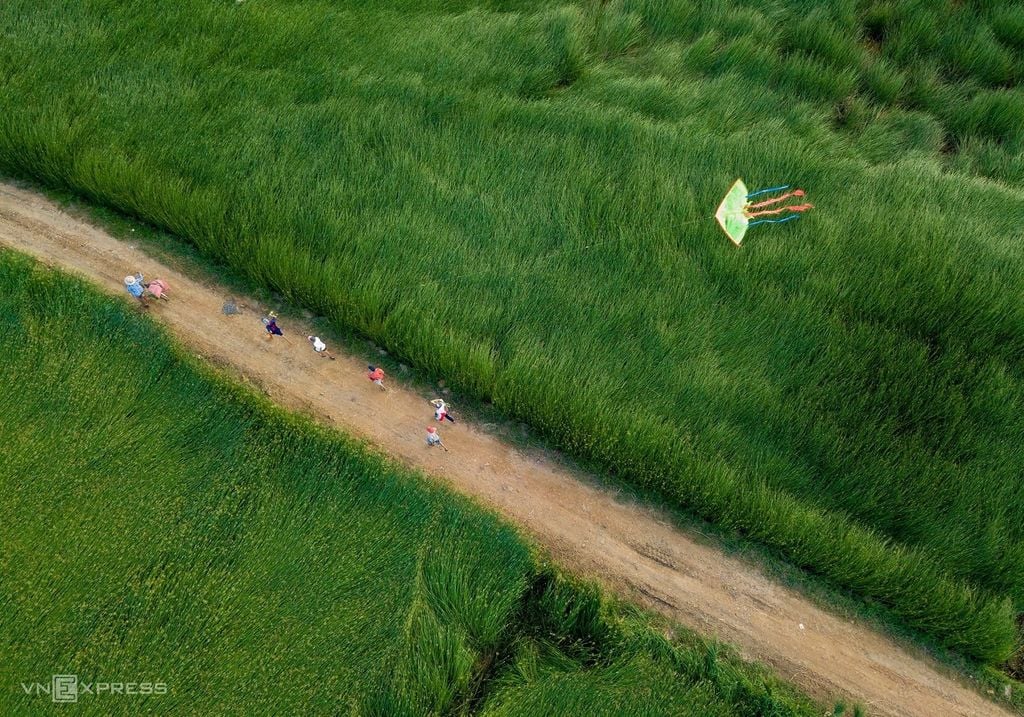
Photo: Photographer Le Chi Trung, Xuan Dai, Song Cau town, Phu Yen province. Photo series of Phu Tan sedge harvest season
Sedge
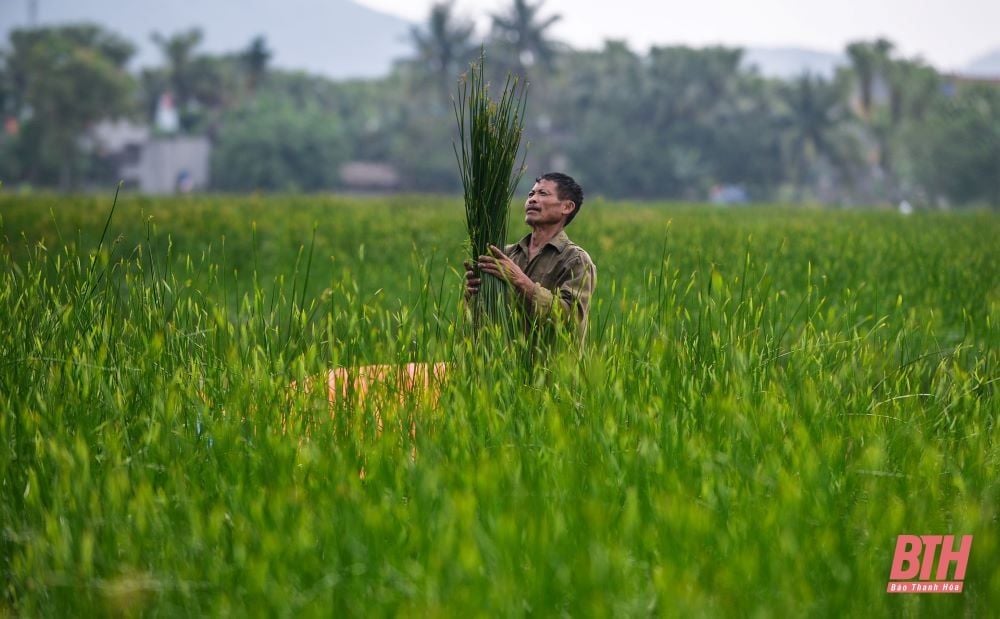
People of Quang Xuong, Thanh Hoa in the sedge harvest season.
Papyrus

Sedge Field
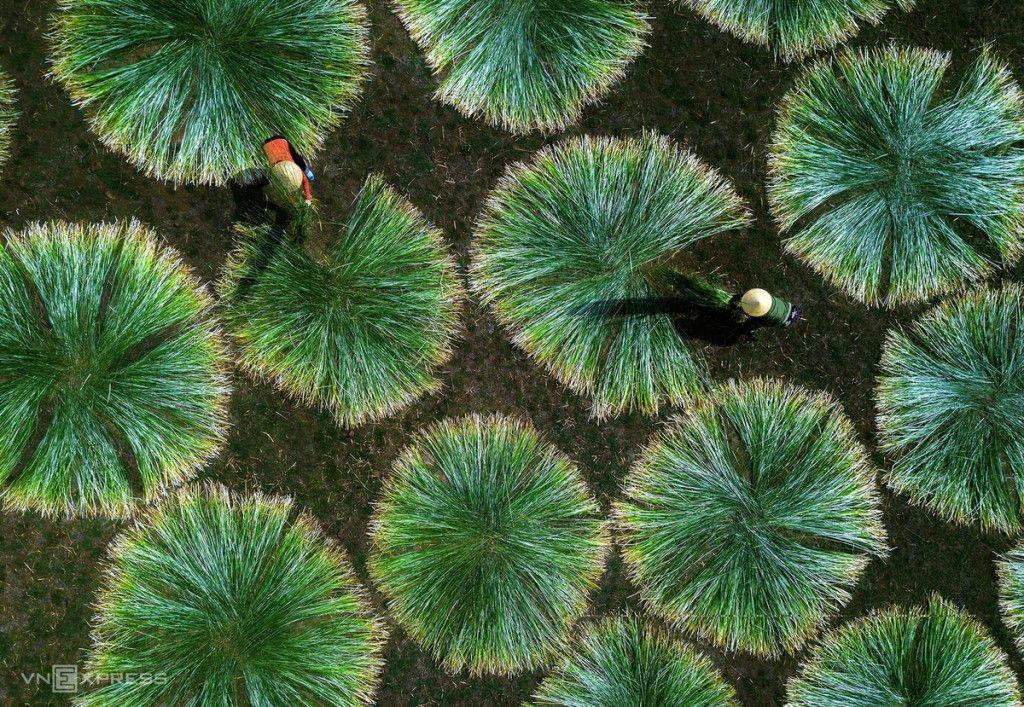
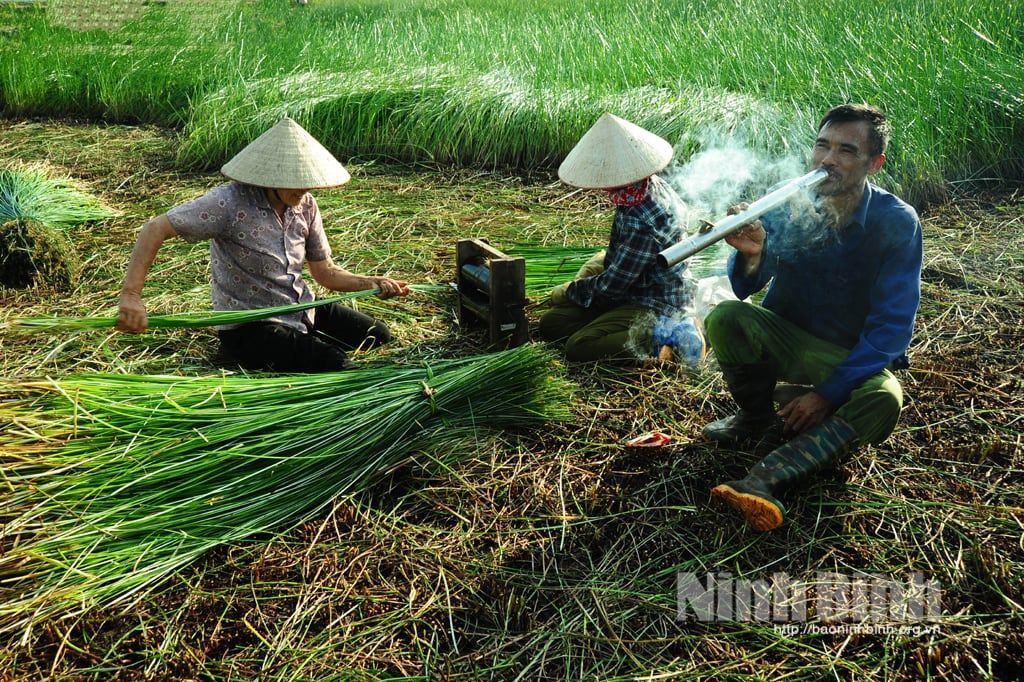
After harvesting, the sedge is selected for quality fibers, then split with a knife and dried in the sun to make the sedge fibers durable and strong, usually when the sedge fibers are about 70% dry, it is done. Splitting sedge requires 2 people. This is a time-consuming and laborious process, because if the sedge is not split in time, it will be very difficult to split when it withers. After being split, the sedge will be dried in the field for 3 days to make the fibers light and soft. After that, it is tied into bundles to be brought home to continue sorting, drying and selling to production facilities. People who dry sedge are most afraid of rain, because the sedge will be damaged, black and unsaleable.
People divide sedge into 2 parts: dyed and undyed.
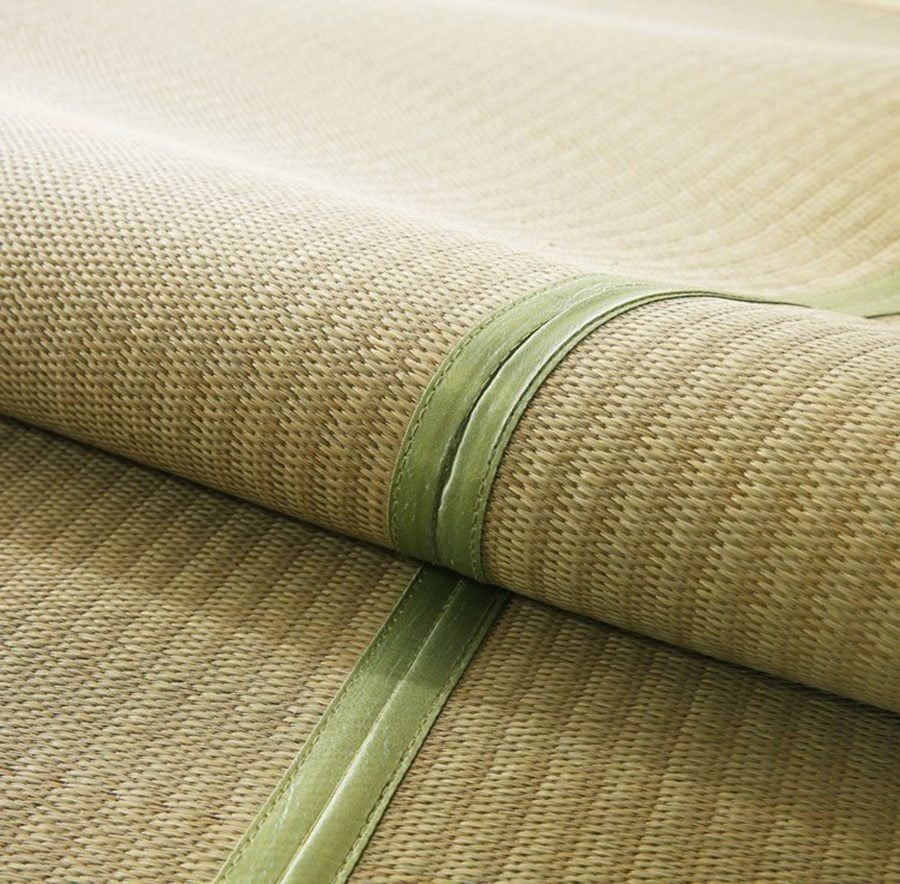
Green living space with sedge: natural and sustainable


This is a perennial herb with a characteristic triangular cross-section and a height of 70cm to over 1m.
Sedge is well known as a sustainable source of raw materials for weaving handicraft products such as mats, baskets, bags and mats.
High fiber content makes sedge fibers flexible and soft but still maintains durability, very environmentally friendly.
Thanks to its fast growth and ease of planting, sedge is being encouraged by localities to expand its acreage to increase farmers' income.
In particular, products made from sedge are popular in the international market thanks to their green, health-safe elements and rustic, familiar aesthetics.
The process of processing, drying and weaving fibers has also been improved to improve quality and diversify designs to serve modern needs.
Not only bringing economic value, developing the sedge profession also contributes to preserving traditional professions, creating stable jobs for local people. Sedge material brings a feeling of comfort while still ensuring the utility and functionality of the product.
Straw mat
History books record that Pham Don Le, an envoy to China, learned the secret of weaving mats from the Chinese and passed it on to our people. The craft of weaving sedge mats in our country was formed around the years 908 - 1009 of the Tien Le Dynasty. Weaving mats by hand is probably very familiar to each of us, created by the Vietnamese by using sedge fibers, drying them, weaving them and binding them together with jute fibers. To increase the aesthetics of the mats, craftsmen often dye the sedge fibers or draw on them characteristic patterns.
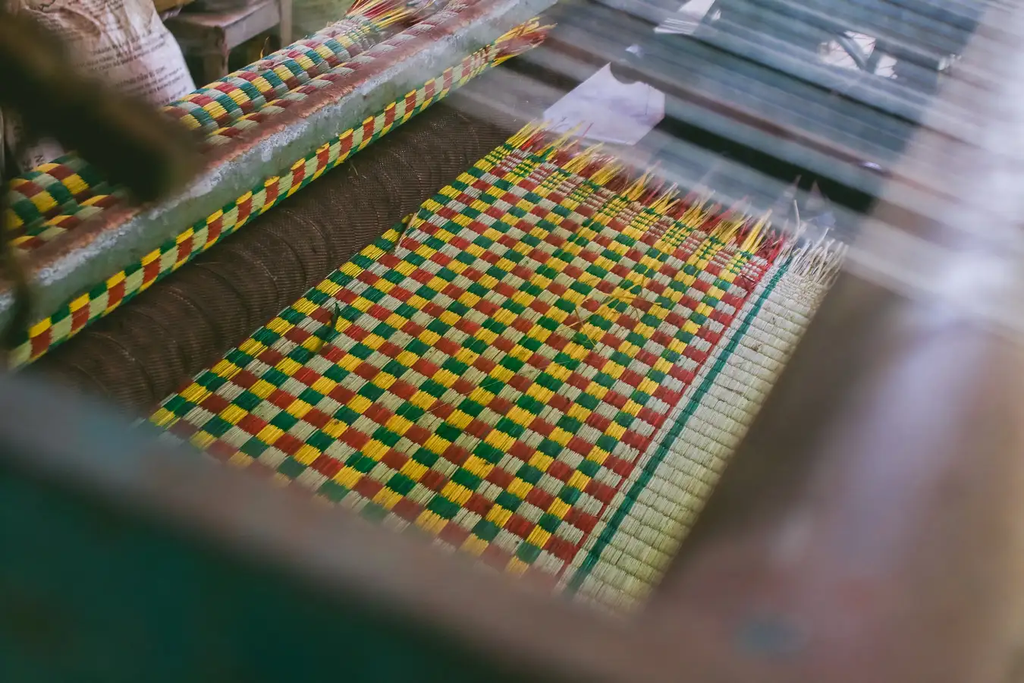
For a long time, sedge mats have been chosen by many provinces in the North and North Central as a typical traditional handicraft product of the locality. With their industrious and creative hands and minds, mat weavers have created mat weaving machines. A sedge mat can be woven by machine in less than an hour. On average, an artisan can make 12-15 mats per day. However, mats woven by hand in the traditional way are still more popular in the market.
Straw mats are durable, airy, cool, suitable for use in summer.
"The sedge mats of my village are dyed with bright colors
My work is through rain, sun, wind and dew.
This projection goes everywhere.
Send the gentleman to spread out his bed to rest.
- Folk songs of the martial arts land of Binh Dinh -
"Eat hom rice, sleep in a coffin bed, cover with a Hoi mat".
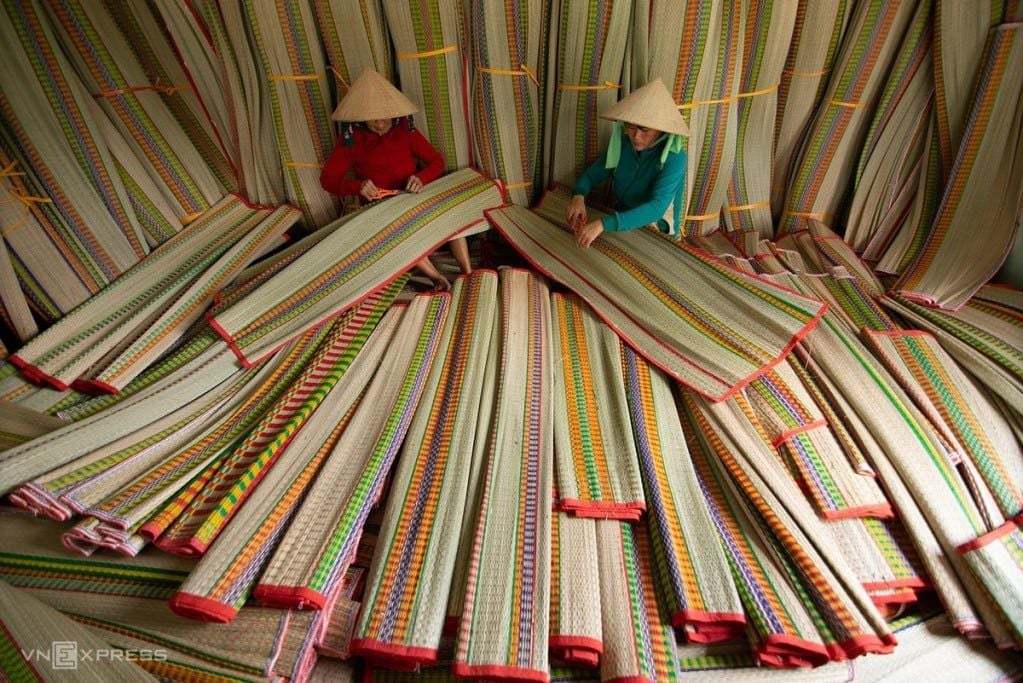
- There are usually two types of sedge mats: plain mats and patterned mats.
- Plain mats are woven from pure white sedge.
- Flower mats are woven from white sedge fibers interspersed with sedge fibers dyed in different colors, creating many types of patterns: brocade mats, bamboo mats, snail-scale mats, dragon and phoenix mats, gray-flower mats, flag mats, and convex neck mats.
To weave a flower mat, the artisans must be really skillful, meticulously combining each dyed sedge fiber to create patterns according to the customer's request. A weaving machine frame has dozens of spools of thread, so the craftsman must be really skilled to be able to create a mat with high aesthetics such as double happiness flower mat, hundred years of happiness or the words Phuc - Loc - Tho. The craft of weaving sedge mats has become one of the traditional crafts of Vietnam that our people always protect and preserve. Typical sedge mat craft villages can be mentioned as:
- Hoi Mat Weaving Village: This weaving village is located in Thai Binh province with a long tradition of mat weaving (said to have been from the 15th century to the present). Currently, the village has about 3,000 households and 80% of them make a living from mat weaving.
- Nga Son mat village: When mentioning Nga Son mat village in Thanh Hoa province, everyone is amazed by the remarkable development of this place. Not only weaving sedge mats domestically, the people here have built the brand "Nga Son mat" to export to Japan and many other countries.
- Ban Thach sedge mat weaving village: A famous mat weaving village in Vietnam in Quang Nam province is Ban Thach. Coming here, you will be overwhelmed by the space for drying mats. Colorful mats are dried everywhere by people, showing off the prestige of a long-standing craft village.
Handbags, straw hats: contemporary and sustainable fashion accessories

ACC259 Trapezoidal Straw Basket
695000.0 VND
0 VND
Soft as silk, elegant as clouds, sedge embraces the essence of heaven and earth, bringing a rustic yet sophisticated beauty to fashion and life. From the skillful hands of artisans, simple sedge fibers are woven into countless products, carrying the flavor of the countryside and the quintessence of Vietnam. Sun-shading sedge hats, sedge baskets for storing things, sedge mats to cool the house, sedge mats to cool the back are close companions, attached to human life for generations. Although time passes, trends change, sedge always holds a special place in the hearts of Vietnamese people, a source of pride and a symbol of simplicity, rusticity and elegance.
0 comments