

“My dream is to beautify the necks of all women in the world with pearls.” - Kokichi Mikimoto (1858 – 1954)
Kokichi Mikimoto was a Japanese businessman, known for inventing a technique that revolutionized the pearl farming industry. He is considered the “king of pearls” of all time.
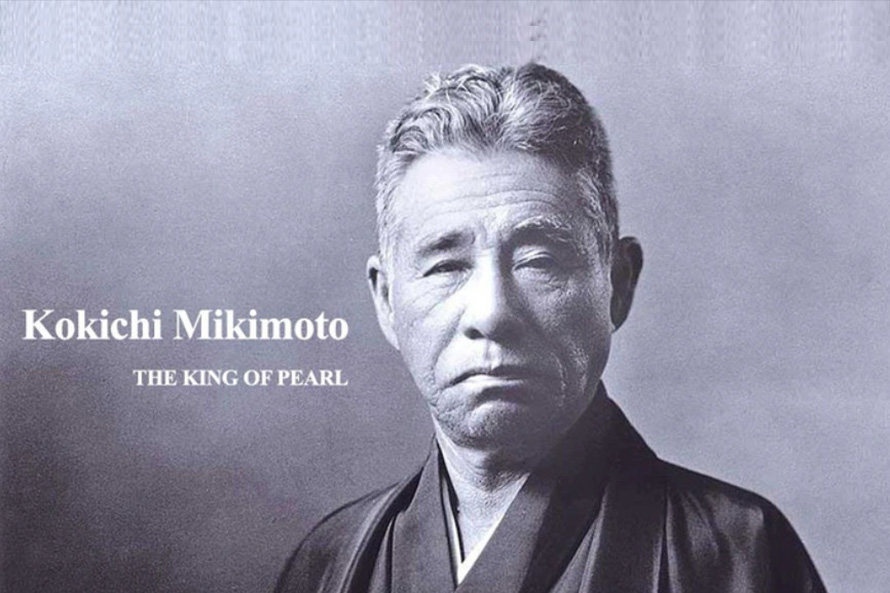
He was born on January 25, 1858 in Toba City, Mie Prefecture, Japan. Kokichi was the eldest of eight sons and three daughters in a working-class family, living off a noodle shop called Awako in Toba City, Mie Prefecture (Japan) - founded by his grandfather Kichizo, who had a great influence on Kokichi. From an early age, Kokichi showed his innate business talent when he participated in the noodle shop's operations, while also buying and selling other items such as seafood, seaweed, coal, vegetables, etc. In his spare time, he also participated in traditional Kyogen plays and was very popular every time he performed at the Kata Shrine in Toba.
At the age of 17 (1875), Kokichi had the opportunity to admire the British Royal Navy's HMS Silver docked at Toba port; many fishermen tried to use small boats to sell necessities to the crew, but were chased away. Thanks to his quick mind and special attention-grabbing skills, Kokichi successfully sold goods to them and earned the first foreign currency of his life.

Photo: aureusboutique.com
Love affair with pearls
With a spirit of adventure and discovery, Kokichi always wanted to travel far and wide. In 1878, after asking his father's permission, he walked from Toba to Tokyo in 11 days. The trip opened up many business ideas for Kokichi when he witnessed how Chinese merchants traded goods at Yokohama port with abalone, sea cucumbers, ... and especially pearls mined from the Shima region - near where he lived - which had very high prices. The dream of becoming a pearl merchant began to take shape from there.
While studying pearl farming, Kokichi discovered a paradox: while large pearls were hard to find, only small pearls (Keshi) were popular on the market, but at exorbitant prices - most of which were collected and processed by Chinese merchants, and were becoming increasingly scarce due to overexploitation. He came up with the idea of an artificial pearl farm in 1888, but encountered many initial difficulties, mainly due to technical errors. Incorrect methods combined with other factors such as algae blooms, ... caused the pearls to die en masse, putting the business on the brink of bankruptcy. It was not until July 11, 1893 that Kokichi had his first successfully cultured pearl. But it took him nearly 30 more years (the 1920s) to become truly famous in the field of pearl cultivation and processing, regularly exhibiting and exporting his products around the world.
Mikimoto continued to research and develop his pearl cultivation techniques. He founded Japan's first pearl company in 1899. His company quickly became famous and Mikimoto was dubbed the "Pearl King", and the Mikimoto Pearl jewelry brand became a symbol of Japanese culture around the world. The first pearl store in Japan. Mikimoto Pearl Store was opened by him in the Ginza shopping district of Tokyo in 1899, laying the foundation for the modern jewelry industry in Japan.
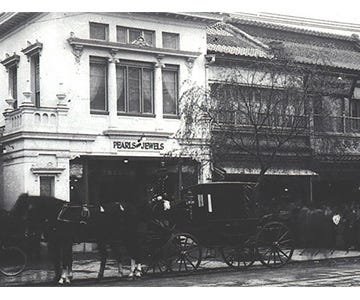
The first pearl shop in Japan. Mikimoto Pearl Store in the Ginza shopping district, Tokyo, 1899
In 1914, Mikimoto began cultivating "Black South Sea Pearl" pearls on Ishigaki Island in Okinawa. In 1931, he officially successfully cultivated a 10mm "Black South Sea Pearl".

The first successfully cultured pearl in 1893

The first successful cultured round pearl in 1905
In 1917, Shiga Prefecture invited Mr. Mikimoto and his associates to apply pearl cultivation techniques in Lake Biwa. After many failures with oysters brought from other places, in 1924, they succeeded by using a single oyster from Lake Biwa to successfully breed 20 pearls. This achievement made Lake Biwa play an important role in the Japanese Fresh Water Pearl industry for the Japanese market and reaching the world.
In 1919, when Kokichi brought round, cultured pearls from the Gokasho farm to London for exhibition and sold them for 25% less than natural pearls, Western jewelers were skeptical about the quality of the products and lobbied the government to issue anti-trade decrees against the sale of synthetic pearls. However, researchers in England and France, after analyzing the composition, confirmed that Kokichi's pearls were of the same quality as natural pearls. Winning the case further increased his reputation throughout Europe.
In 1926, at the age of 68, Kokichi spent nine months traveling across the United States, visiting universities, research institutes, laboratories, and meeting famous people. When he went to Europe, he often visited museums, famous jewelry designers, and on his way back, he found an ideal place to raise pearls in the Bay of Bengal (India). It can be said that Kokichi spent most of his life researching and developing the cultured pearl industry.
In 1927, during his return to the United States, Kokichi met the great inventor Thomas Edison and was invited to visit his home in West Orange, New Jersey. When looking at the pearl that Kokichi had cultivated, the master of world invention Edison exclaimed: "This is not a cultured pearl, but a real pearl. In my laboratory, there are two things that cannot be created, diamonds and pearls. Your successful cultivation of pearls is one of the miracles for mankind, something that biology seems to be impossible to do." At that moment, Kokichi replied: "If you are the Moon in the Inventive Sky, then I wish to be a single star in the Milky Way." The conversation was published in the New York Times, laying the foundation for the global fame of Mikimoto and his cultured pearls overnight.
Mikimoto's pearl cultivation technique revolutionized the pearl industry. It made pearls more popular and accessible to many people. Today, cultured pearls are widely used in jewelry and are among the most expensive jewelry in the world.

Cherry Blossom brooch with cultured pearls by Mikimoto and advertised in the Japan Times in 1906 with the message: "Genuine Fine Oriental Pearls"
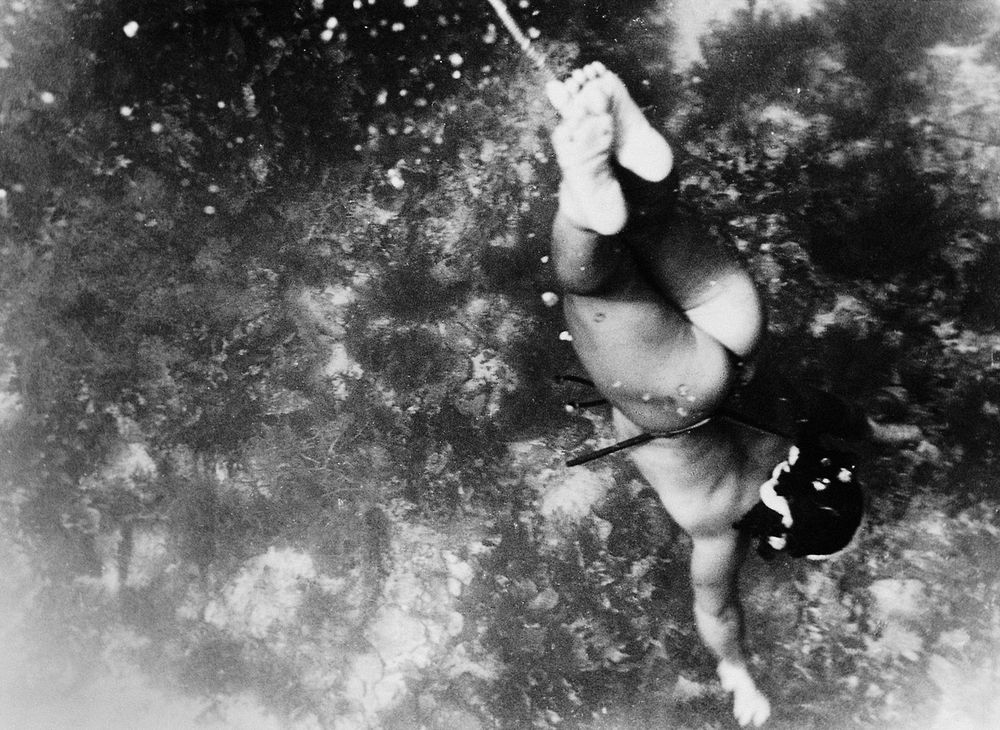
Thanks to his development of pearl cultivation techniques, the pearl diving profession of AMA (legendary Japanese pearl divers) also flourished. AMAs harvest oysters from the seabed and bring them back to the farm. After artificially implanting pearls, AMAs return the oysters to the seabed. When the pearls are formed, AMAs dive to the seabed to harvest the oysters and collect the pearls. Kokichi Mikimoto was the one who designed the traditional all-white costumes for AMAs.

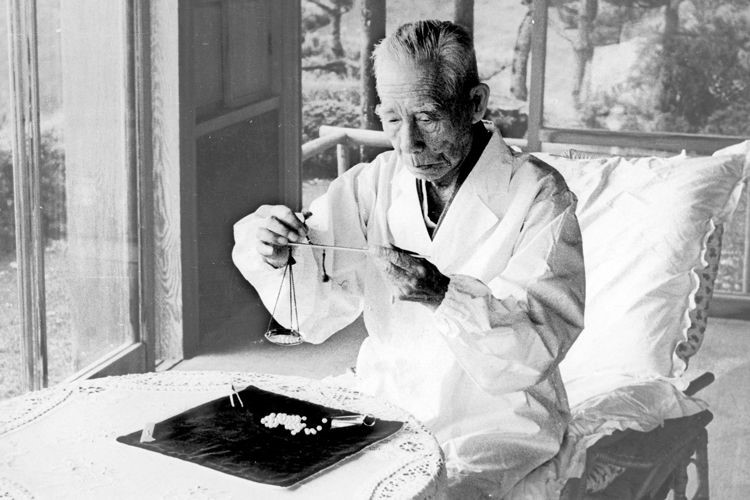
Mikimoto died on September 21, 1954 at the age of 96. He is considered one of Japan's greatest entrepreneurs and one of the most influential people in the pearl industry.
A great personality
As a person who especially loves nature, especially the beautiful landscapes of Shima Bay, Kokichi always hoped that this place would one day be planned as a national park for everyone to come and admire. In 1931, he proposed to the Japanese Ministry of Internal Affairs and self-funded to help expand the transportation system, establishing a park on Mount Asama, where there is an observation building named Renju-an (String of Pearls) that he often visited in the summer. This was also the first national park in Japan after World War I. Talking to the press, Kokichi said: "Japan must give more priority to tourism, and I really want to open more parks like this nationwide."
In real life, Kokichi was also a person who loved children very much. He always cherished the dream of writing textbooks for children, which did not come true until 1947 - the story "The Pearl World" he wrote was included in the 5th grade textbook of Japanese students. At the age of 90, Kokichi said:
“The most important things in life are knowledge and luck – which determine success. If someone lives long, they are obviously successful.”
His spirit has been continued and promoted by his descendants to affirm the position of the Mikimoto Pearl brand in the world's high-end pearl village.
0 comments