

The "áo yếm" (traditional Vietnamese bodice) is one of the Asian garments with a global influence. The yếm is simultaneously demure and innocent, yet alluring and deeply captivating. In the past, the yếm was worn as lingerie or loungewear by Vietnamese women. When stepping out, women would typically layer other garments over it, such as the "áo tứ thân" (four-panel dress) or "áo mớ ba mớ bảy" (multi-layered dress). Today, with daring cuts that challenge the skills of tailors, the yếm has become a pinnacle design for showcasing the beauty of the female form. The modernized yếm has become a style that cleverly accentuates the elegant beauty of the neck and proud shoulders, while creating a sense of lightness and femininity. Western fashion has long been drawn to the irresistible sensuality of the Vietnamese yếm, borrowing its silhouette to create the modern halter top.

The yếm accentuates stunning curves, revealing the smooth bare back and slender waist of young Vietnamese women of the past.
Oh, maiden in the rosy silk yếm
The yếm is a traditional garment for Vietnamese women, influenced by the Chinese "dudou," and was particularly popular in the North. The yếm appeared in the lives of people in the Kinh Bac region long ago, but it was not until the Ly Dynasty (12th century) that it became fundamentally established as an inner garment—a piece of clothing that has survived through the ages until today.
In the past, the áo yếm was often referred to simply as the "yếm." By practical definition, the yếm is an undergarment used to cover the chest and abdomen. Yet, this small piece of clothing served as a distinct element in the dressing culture of traditional Vietnamese women.

Girls from wealthy families often wore colored yếm made from expensive fabrics.
In the 18th and 19th centuries, the yếm had a simple structure requiring little fabric—just a square or rhombus-shaped piece about 40cm on each side, draped diagonally across the chest. The top corner was cut into a round shape for the neck, with two strings attached at the neck to tie behind the nape, and two straps at the side corners to tie behind the back. A round neck was called "yếm cổ xây," a pointed V-shaped neck was "yếm cổ xe," and a deep V-cut was known as "yếm cổ nhạn."
The yếm was worn by Vietnamese women of all social classes, from princesses in the royal palace and ladies of noble families to common women working hard from dawn to dusk to provide for their husbands and children. The yếm was a vital part of the Vietnamese woman's overall attire. Worn with an "áo cánh" (simple blouse), it highlighted the beauty of a triple-creased neck and rounded shoulders. A white yếm paired with a brown "áo dài tứ thân" created an elegant, modest look. The color of the yếm at the chest was a unique, subtle, and expressive feature. During labor, women often wore white or gray yếm, covered by a simple brown outer shirt.
Yếm đào (Rosy bodice)

The "yếm đào" was an indispensable part of a young woman's wardrobe in the past. Upon reaching puberty, girls began to pay attention to themselves and learned to beautify their appearance. This was also when they would demurely wear the rosy "yếm đào," exuding a sense of modesty, gentleness, and charm.
Red and rosy yếm, worn within the multi-layered dresses of girls attending spring festivals, highlighted their vibrancy and harmony while serving as a powerful visual focal point. This was a style typically reserved for young girls during festivals, celebratory days, or when at home. Traditionally, the yếm đào was worn underneath outer garments like the "áo tứ thân" or various "áo dài." Meticulous girls would often go to the market themselves to buy silk to sew their own yếm đào.
Yếm cổ xây (Round-neck bodice)

This style is similar to most other yếm in shape and usage, except that the neck of the "yếm cổ xây" is designed in a circular shape. The round-neck yếm is more modest than others, so it was often worn by women in the past for farm work or going to the market.
Yếm cổ nhạn (V-neck bodice)

The "yếm cổ nhạn," also known as the "cổ xẻ" (split-neck), has a V-shape. The trim features three embroidered stitches resembling bird footprints, which serves both to prevent the fabric from tearing and as a decorative detail.
Yếm đeo bùa (Bodice with an amulet pouch)
Oh, maiden in the rosy yếm with an amulet pouch,
If your parents would sell you, I’d buy half your spirit.
Another type of yếm often used by young girls was the "yếm đeo bùa." It is called this because the wearer would often place musk inside a small fabric pouch attached to the bodice—a highly effective "weapon" for girls in the past. Beyond that, the yếm was the centerpiece of many unique love stories. In the past, when girls went on dates, they would often tuck a piece of betel nut into their yếm, referred to in folklore as "betel nut of the yếm strap." Perhaps no betel is more "sacred" than the one kept in the yếm.
Lying in bed wrapped in ten blankets,
How can that compare to the warmth of your yếm?

The yếm and the "wasp-waist"
Vietnamese women in the past, regardless of social class, all wore the yếm, from rural women to princesses in the palace. The yếm became an indispensable part of traditional female attire: the yếm, the four-panel dress, the waist belt, the crow’s beak headscarf, black trousers, and the conical hat.
It must be said that the yếm is the most sensual traditional garment for Vietnamese women to this day. Since ancient times, the rustic yếm has appeared in poetry: "If only the river were as narrow as a handspan, I would build a bridge of yếm straps for you to visit," and "In the rain and wind, covering with a pair of yếm straps is warmer than a thousand cotton blankets."
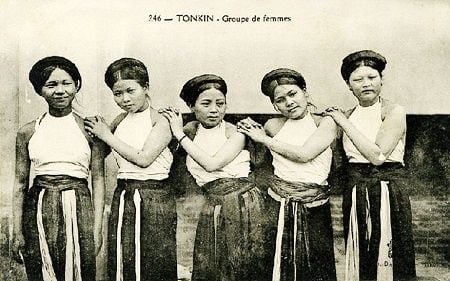
The sensual daily image of Vietnamese women in the past - Tonkin
The yếm underwent many changes throughout history. Initially, it was made from simple materials like raw, rustic fabric. Later, it was sewn from soft, smooth fabrics with diverse colors and rich decorative patterns. The yếm highlights the beauty of Vietnamese women with their slender shoulders, triple-creased necks, and smooth, white skin. Wearing a yếm is both breathable and alluring, helping young women subtly showcase their "ant-like" waists and smooth backs. The yếm creates an appearance of modesty that is, in reality, very sensual.
"A maiden rests, oversleeping her nap,
Too lazy to pin the bamboo comb in her hair,
The rosy yếm slips low upon her bosom,
Those twin mounds of jade still holding the dew,
A peach-blossom spring, the stream yet untouched."
- Hồ Xuân Hương -
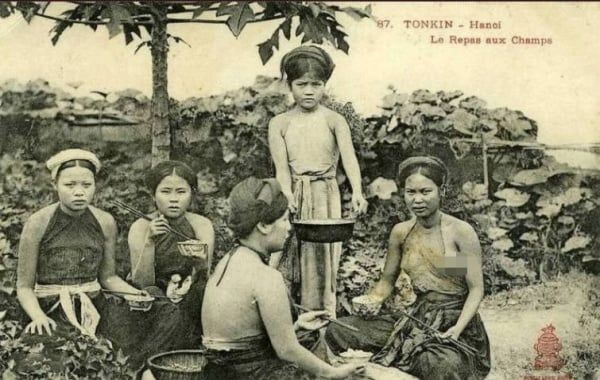
The sensual daily image of Vietnamese women in the past - Tonkin
Some researchers believe the yếm was created to accentuate the "wasp waist," which was considered a standard of beauty in Vietnamese culture. According to traditional Vietnamese beliefs, a beautiful woman must have a narrow, tapered waist. The half-modest, half-"careless" look of the yếm highlighted the slender wasp waist of traditional Vietnamese women, leaving many young men spellbound. People of the past believed that women with wasp waists were not only beautiful but also possessed all the virtues of a wife and mother. "A woman with a wasp waist is both adept at pleasing her husband and nurturing her children."
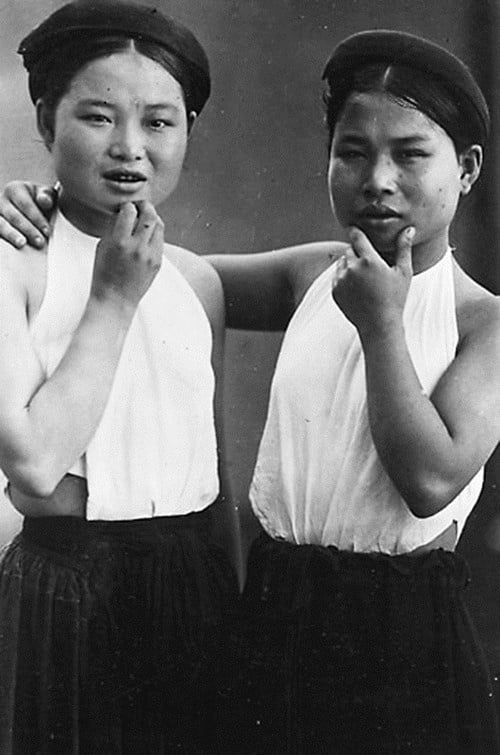
Vietnamese women, 1919 - 1926 period
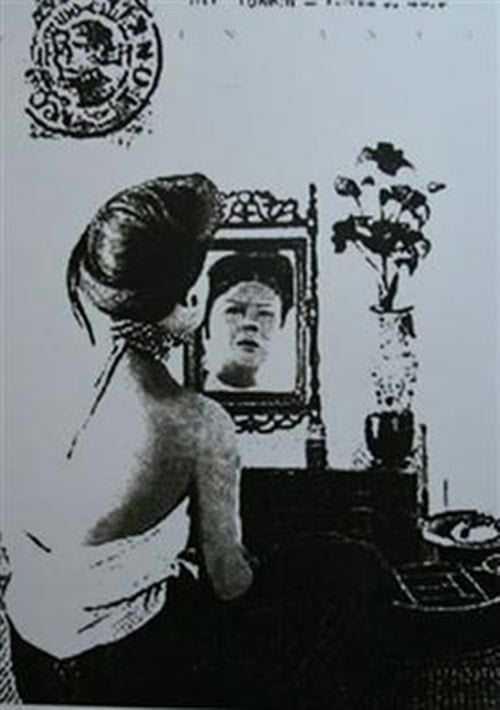
The smooth, white back and slender waist of a traditional Vietnamese girl,
fully revealed in the white yếm strap.
In the past, the yếm was considered somewhat sacred. No one sold ready-made yếm; young women would typically cut and sew them themselves, and even when washing or drying them, they had to be discreet to avoid exposure. The yếm đào was an indispensable part of a young woman's wardrobe. Upon reaching puberty, girls began to pay attention to themselves and learned to beautify their appearance. This was also when they would demurely wear the rosy "yếm đào," exuding a sense of modesty, charm, and gentleness.
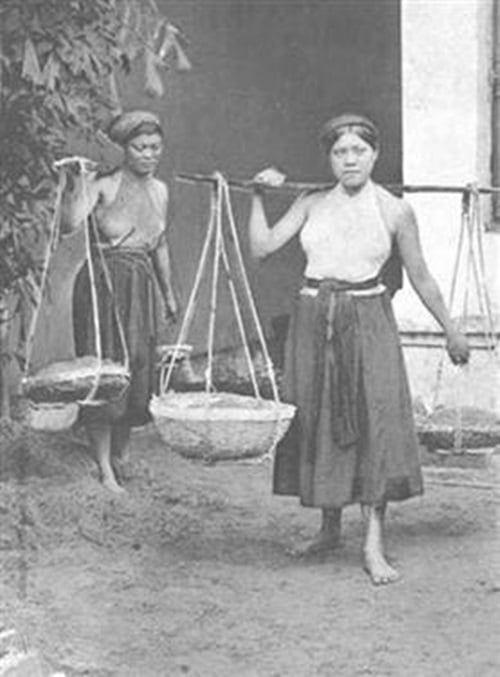
Scholar Phan Ke Binh described the attire of Northern women in the early 20th century as follows: “Women wore dark-colored headscarves, made of either silk or fine gauze, or brown fabric. In cold weather, they would wrap an additional square headscarf made of brown fabric or dark-dyed cloth over it. The yếm (bodice) had a rounded or hemmed neck, most commonly in white. The outer shirts were also dark or brown; only the flamboyant or female singers would wear colors like blue or red. Trousers were mostly made of oak-colored fabric, dark silk, or occasionally red silk.”
“The yếm, worn to cover the chest, is a square piece of fabric with one corner cut for the neck—either slit, spoon-shaped, or rounded—with straps attached to tie around the neck, and the two opposite corners extending to the sides to be tied around the back and front of the waist. It was usually tied tightly to prevent the breasts from protruding, showing off alluring curves, or moving and bouncing excessively.” - Đất lề quê thói (Customs of the Land) - Vu Van Khai

The yếm served as an undergarment to cover the chest, yet it was often used casually in daily life. Vietnamese women typically wore yếm in modest colors, not flashy ones.
“If you go out nearby wearing only a yếm, no one will criticize you” - Quê Rích Quê Rang – Tran Y (Quang Ngai Beloved Collection)
“In hot weather, those doing hard labor would only wear a yếm to cover their chest, which was discreet enough, without wearing a shirt.” - Đất Lề Quê Thói (Customs of the Land), Nhat Thanh Vu Van Khai
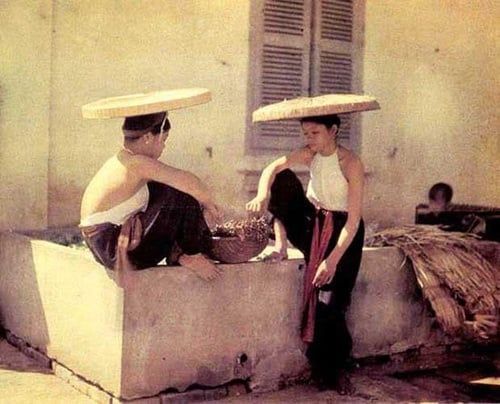
Naturally, the yếm would not be used as formal attire or to receive honored guests. Court ceremonial dress in the past was very formal and solemn, from those greeting guests to those serving traditional music. The yếm, of course, was only used as an undergarment.
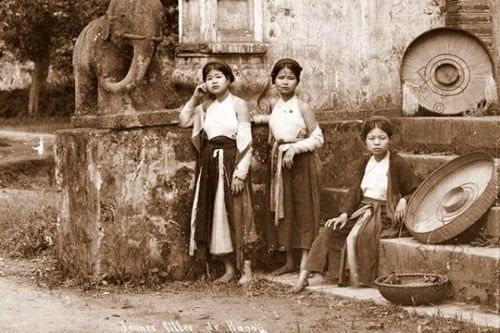
Young women layered a long-sleeved shirt over the yếm.
The Yếm in Contemporary Fashion
Before the áo dài (long dress) was introduced, a favorite outfit for ladies was a yếm paired with an unbuttoned outer jacket. When going out, this was layered with an áo dài, a silk skirt, a pink or yolk-yellow silk sash tied around the waist, a dangling silver chain, and a betel-chewing kit at the side, all while wearing sandals. Furthermore, the street outfit had to include two headscarves: a silk scarf (worn underneath) and a crow-beak scarf (worn on the outside). On festive occasions, young women often adorned themselves with a wide-brimmed flat hat and wore their hair up with a comb. That was how important the yếm was to Thang Long's attire.
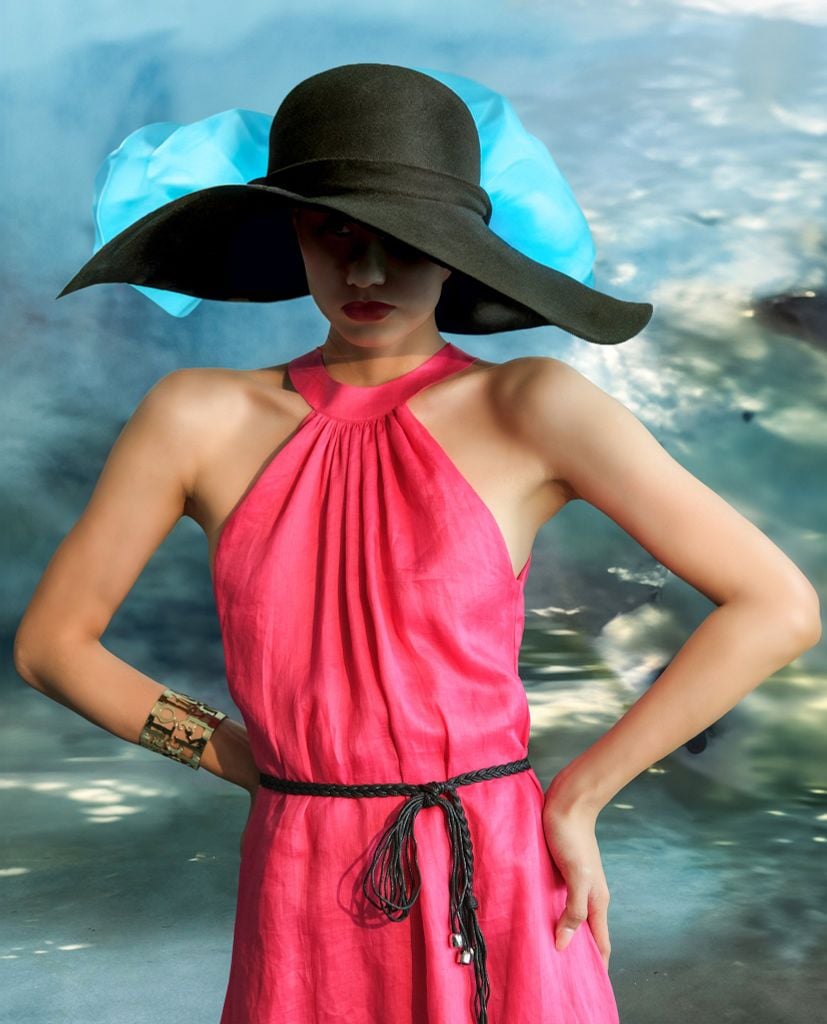
After a long period of being forgotten in favor of Western fashion trends, the yếm is gradually making a comeback today with many contemporary variations: wearing a yếm instead of a shirt paired “smoothly” with jeans or a skirt, or the yếm incorporated into flowing long dresses that showcase the shoulders.
Today, the yếm collar still holds an important place in Vietnamese culture and is applied in contemporary fashion:
- Traditional attire: The yếm collar is an indispensable part of traditional costumes such as the áo dài, áo tứ thân (four-paneled dress), etc.
- Modern attire: The yếm collar is adapted and combined with modern items like shirts, crop tops, skirts, etc., creating unique and impressive fashion styles.
- Fashion accessory: The yếm collar is used as a unique fashion accessory, creating a highlight for the outfit.
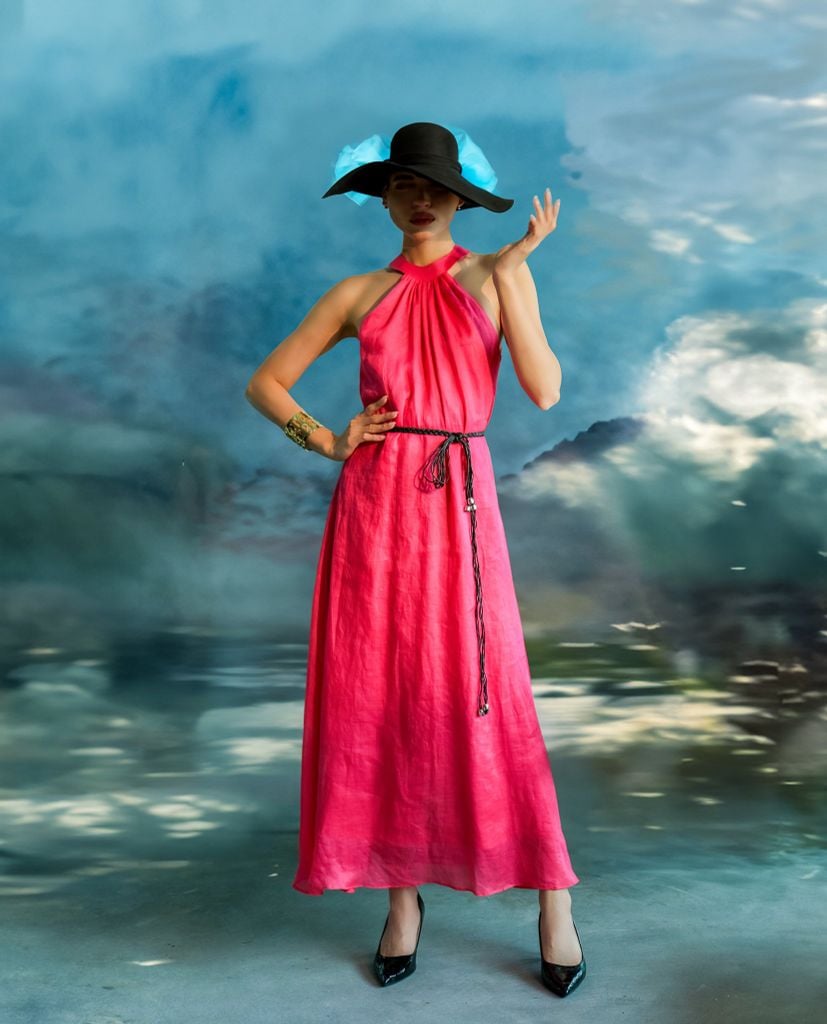
The áo yếm, an East Asian undergarment, possesses an intense allure that has permeated the global fashion flow. Carrying a blend of innocent shyness and salty seduction, the yếm has become a symbol of the graceful beauty of Vietnamese women.
In the past, the yếm was an undergarment or loungewear for Vietnamese women. When going out, women often draped other garments over it, such as the áo tứ thân or layered shirts. Today, the modernized yếm has become a style that cleverly highlights the lines of the neck and shoulders, while creating a gentle, feminine feel. With daring cuts, the yếm helps showcase the beauty of the female form. With the development of globalization, cultures around the world have intersected and influenced each other. Western fashion has been captivated by the irresistible sexiness of the Vietnamese yếm. They have borrowed the silhouette of this garment to create today's "halter top" style.
East Asian Undergarments: Originating from the Tâm Y
The first East Asian undergarment recorded in history is the tâm y (心衣) or tiết y (褻衣). Emerging from the Qin – Han dynasty, China's first two dynasties, this garment provides a perspective on early East Asian undergarment fashion.
The tâm y was designed from a rectangular piece of fabric wrapped around the body, leaving the back and armpits exposed. Shoulder straps and ties around the waist in the back helped secure the garment to the wearer's body. Though simple, this design demonstrated sophistication and suitability for the hot and humid climate of East Asia.
The tâm y played an important role in the history of East Asian undergarments. It was the foundation for the development of many other types of innerwear later on, such as the yếm, bras, panties, etc. Each type of undergarment carried its own distinct characteristics, reflecting the culture and aesthetics of each era.
Two versions of the first undergarment recorded in East Asian history. One version had cross-shoulder straps, the other two straps. The common feature is the exposed back and ties at the back. Photo: gtacevedobolivia.com
The Áo Yếm and Yang Guifei
From the simple tâm y of the Qin – Han era, East Asian undergarments underwent a spectacular transformation with the appearance of the ha tử (诃子) during the Tang Dynasty (618 – 705 AD). This was the only Asian undergarment exposed outside of clothing, creating a unique highlight in the history of East Asian fashion.
Unlike other types of innerwear that were discreetly hidden, the ha tử featured a bold design with a high, tight-fitting, and uplifted cup section, fully showing off the wearer's full upper chest. The part under the bust was secured by a sturdy sash, creating a slender and sensual look. The appearance of the ha tử reflected a change in the perceptions of fashion and aesthetics for women during the Tang Dynasty. They were no longer shy about showing off their body curves; instead, they confidently expressed their sensual beauty and individual personalities.
The undergarment of the Tang Dynasty was quite similar to a corset in showing off the wearer's curves. It was made from thick fabric. The band under the bust had a lifting effect. Because it was exposed, it was made from multi-colored, meticulously woven materials. Photo: gtacevedobolivia.com
One of China's Four Great Beauties, Yang Guifei, loved this undergarment model very much. Yang Guifei had a rather plump figure, so the ha tử particularly enhanced her bust. It was Yang Guifei herself who, with her influence, helped promote this style. Women from countries influenced by Chinese culture at that time quickly followed her lead, wearing similar undergarments. From there, the Tang Dynasty undergarment style spread to other parts of Asia. The ha tử is believed to be the precursor that created the Vietnamese yếm and the Japanese haragake.

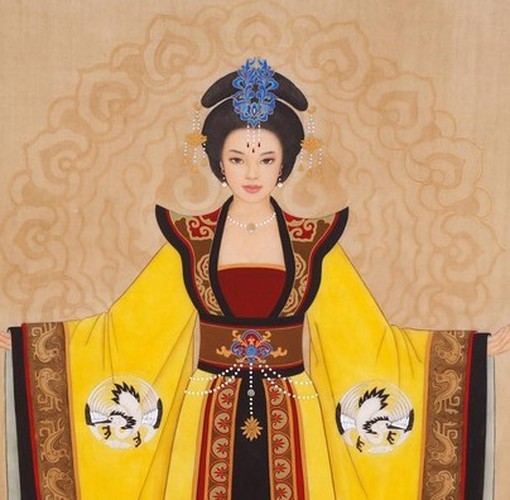
Tang Dynasty beauties like Wu Zetian and Yang Guifei flaunted their sexiness with the Ha tử, exposed through outer layers of clothing.
From Ha tử to Doudou
From the Tang Dynasty to the Qing Dynasty, the ha tử (诃子) gradually transitioned into the doudou (肚兜) model, which has a shape closest to the contemporary yếm. The rectangular shape of the fabric changed into a diamond shape to cover the abdomen and navel as well. The goal shifted from showing off the bust to binding the chest tightly and hiding all curves.
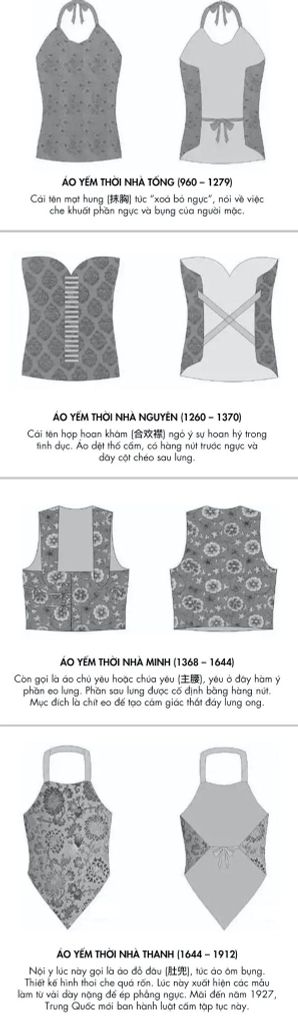
Image source and records: newhanfu.com
During the Qing Dynasty, the yếm spoke volumes about the wearer's social status. Ladies from wealthy families owned yếm made of high-quality silk, intricately embroidered with patterns such as peaches (wishing for longevity), pomegranates (wishing for many children), or flowers and plants symbolizing a girl's virtue. The ties behind the back could even be made of gold, silver, or bronze chains. Commoners used yếm made of coarse fabric with silk ties in the back.
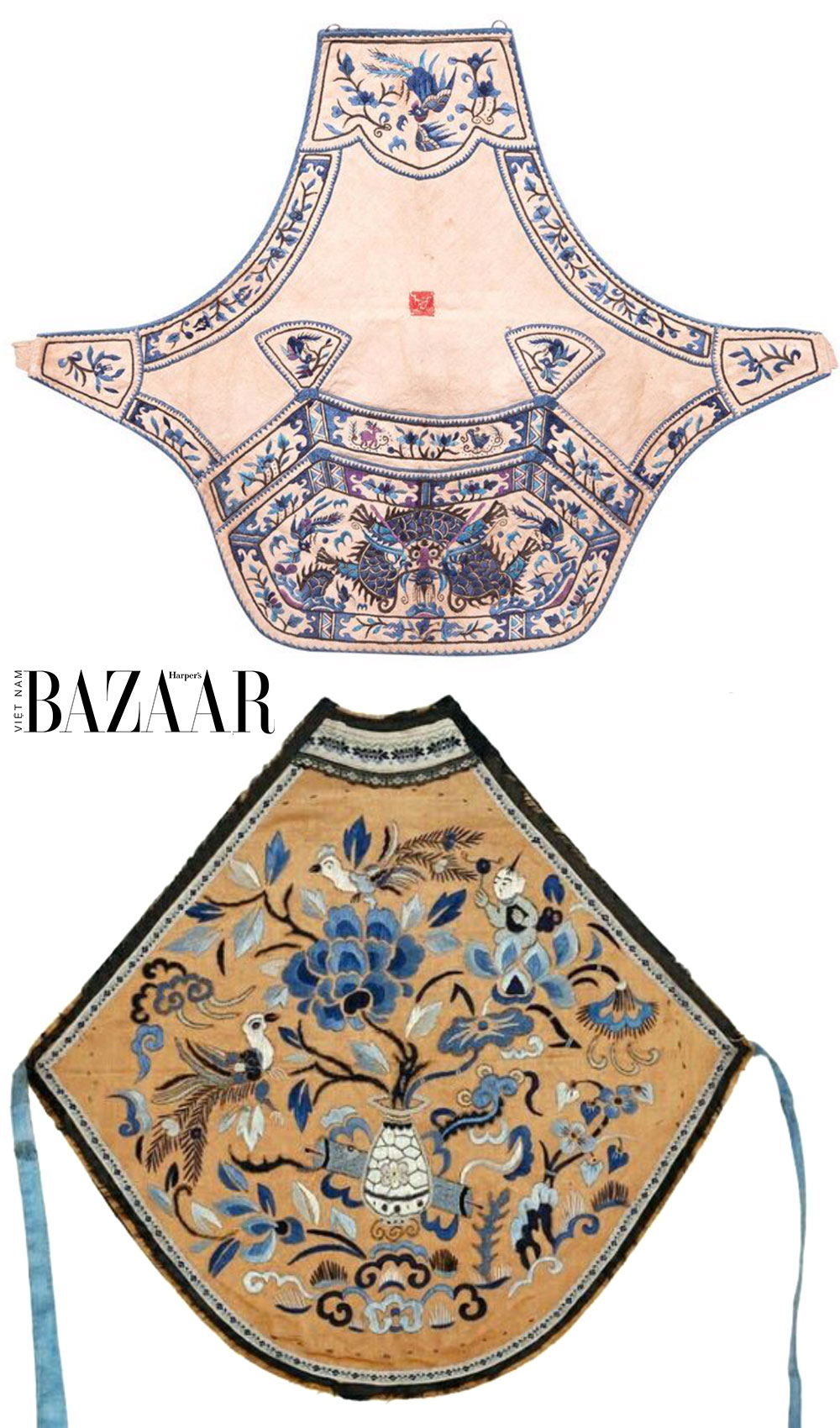
Vintage embroidered yếm. Photo: 1stdibs
The Áo Yếm Arrives in Vietnam
The first records of the yếm in Vietnamese fashion history appeared during the Ly Dynasty (1009–1225). The yếm is believed to have been introduced from China but was adapted to suit Vietnam's climate and culture.
Vietnam's hot and humid climate required clothing that was both airy and discreet. The yếm met both these requirements. Thin, lightweight materials, along with an open back and armpit design, helped the wearer feel comfortable without being stifled by heat. Compared to the Chinese version, the Vietnamese yếm had a lighter structure. The yếm was made from a thin square piece of fabric, only about 40cm on each side. The yếm neck could be rounded or deeply slit in a V-shape, creating variety in style.
Over time, the 'ao yem' (traditional Vietnamese bodice) has evolved from mere undergarment to an essential part of Vietnamese women's attire. The yem has been adapted into various styles, materials, and colors, suited to different occasions and the wearer's preferences.
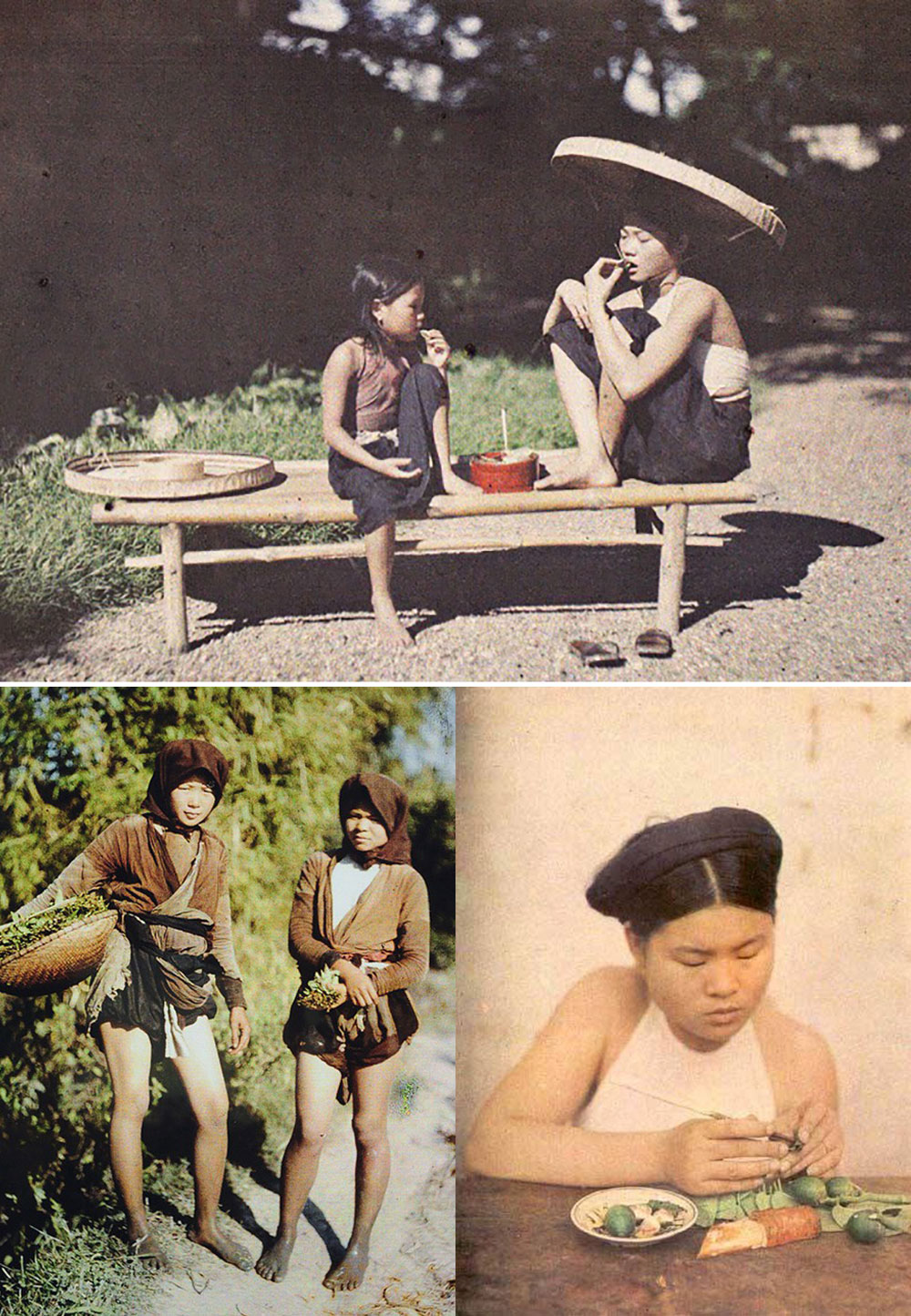
The Vietnamese rural yem was made from a simple layer of fabric, breathable for the hot climate. When going out, women would wear an outer garment for modesty. Photo: kienthuc.net
The Yem - A manifesto of social status
During the Dai Viet era, political and economic stability helped trade flourish. The yem was not just a garment but a symbol expressing the social position of Vietnamese women in feudal society. The yem was upgraded with a variety of colors and different fabric materials.
The colors of the yem were strictly regulated, reflecting rank and social class. Rural working women wore rough brown yem, dyed with tree bark. Daughters of mandarins were permitted to wear red, known as 'yem dai hong' (deep red yem). The color red symbolized luck and power. Courtesans wore peach-colored yem, signifying flirtatiousness and impropriety. The color yellow was forbidden as it was the color of the king and symbolized nobility.
The material and style of the yem also denoted social status. Silk, satin, and brocade were reserved for the elite. Commoners' yem were made from rustic, coarse fabric. Yem styles were also diverse, ranging from simple to elaborate, featuring intricate hand-embroidered motifs.
By the 20th century, class concepts gradually faded, and regulations regarding yem colors and materials were no longer strict. The yem became a popular garment for Vietnamese women, expressing a graceful and elegant beauty.
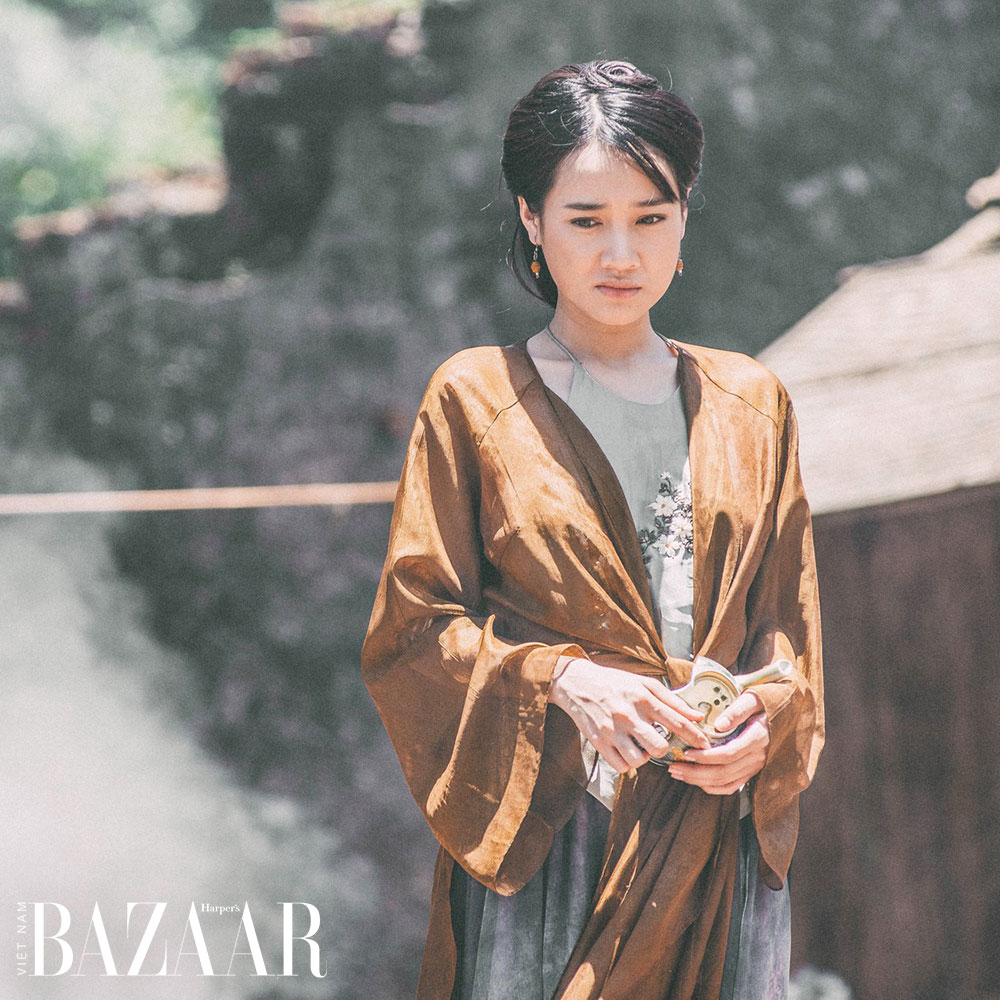
The elegant-colored ao yem worn by Nha Phuong is close to the colors traditionally worn by girls from respectable families.
Ao yem - An alluring touch of Oriental charm
Previously, the ao yem acted as lingerie or loungewear for Vietnamese women. When going out, they would layer it with an 'ao tu than' (four-panel dress) or other outer garments to cover up. Over time, the ao yem has been innovated, becoming a unique outfit that skillfully accentuates the slender lines of the neck and shoulders, while creating a gentle, feminine look for the wearer.
With bold cutouts, the ao yem helps showcase the beauty of the body in a subtle, suggestive way. This unique aesthetic has caught the attention of the international fashion scene. The Vietnamese ao yem became a source of inspiration for Western designers, giving rise to the 'halter top' style popular today.
The development of globalization has fostered cross-cultural exchange. Western fashion was captivated by the sensual, modest beauty of the Vietnamese ao yem, borrowing its form to create unique designs with a distinct Oriental mark.
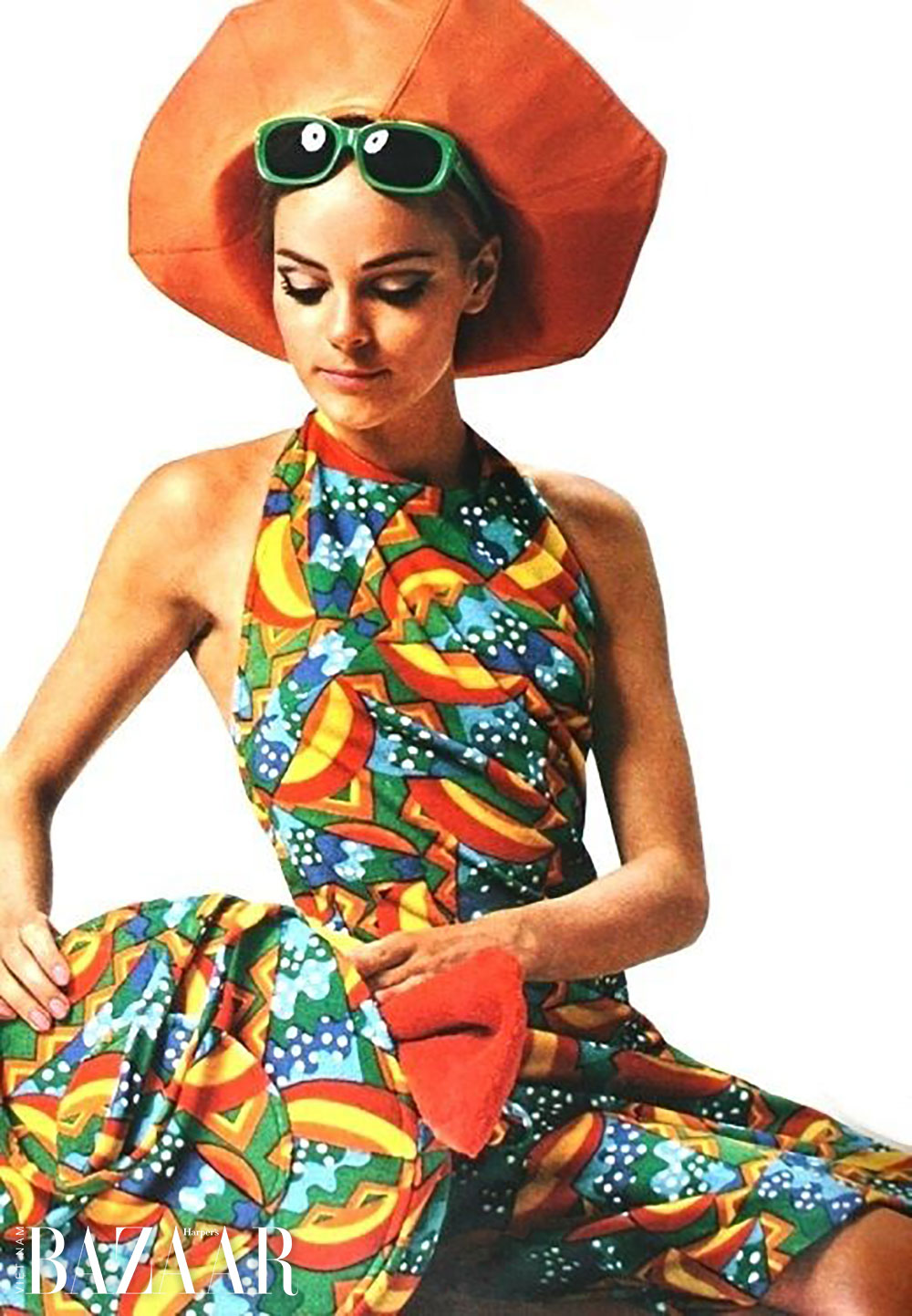
The halter top first appeared in Western culture in the 1940s. It was quickly integrated into modern tops and dresses. Photo: 1960s fashion
Meanwhile, in Asia, innovated versions of the ao yem have emerged. No longer just an undergarment, they are intricately designed and have become trendy fashion items.
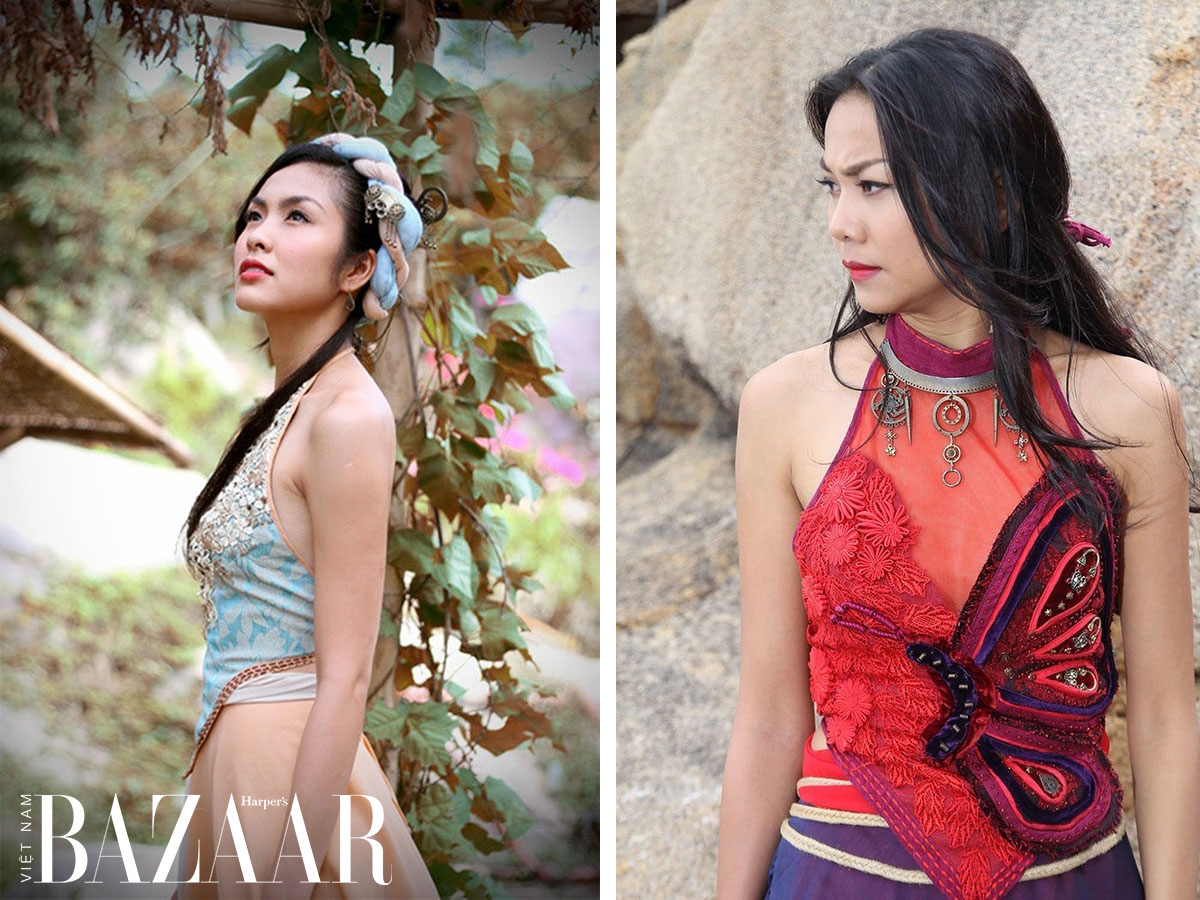
Tang Thanh Ha and Thanh Hang wear innovated ao yem in the film 'My Nhan Ke' (Beauty Trap). Although made from diverse materials like sheer fabric and satin, the yem is intricately embroidered to cover sensitive areas of the wearer's body.
Choosing appropriate lingerie when wearing an ao yem
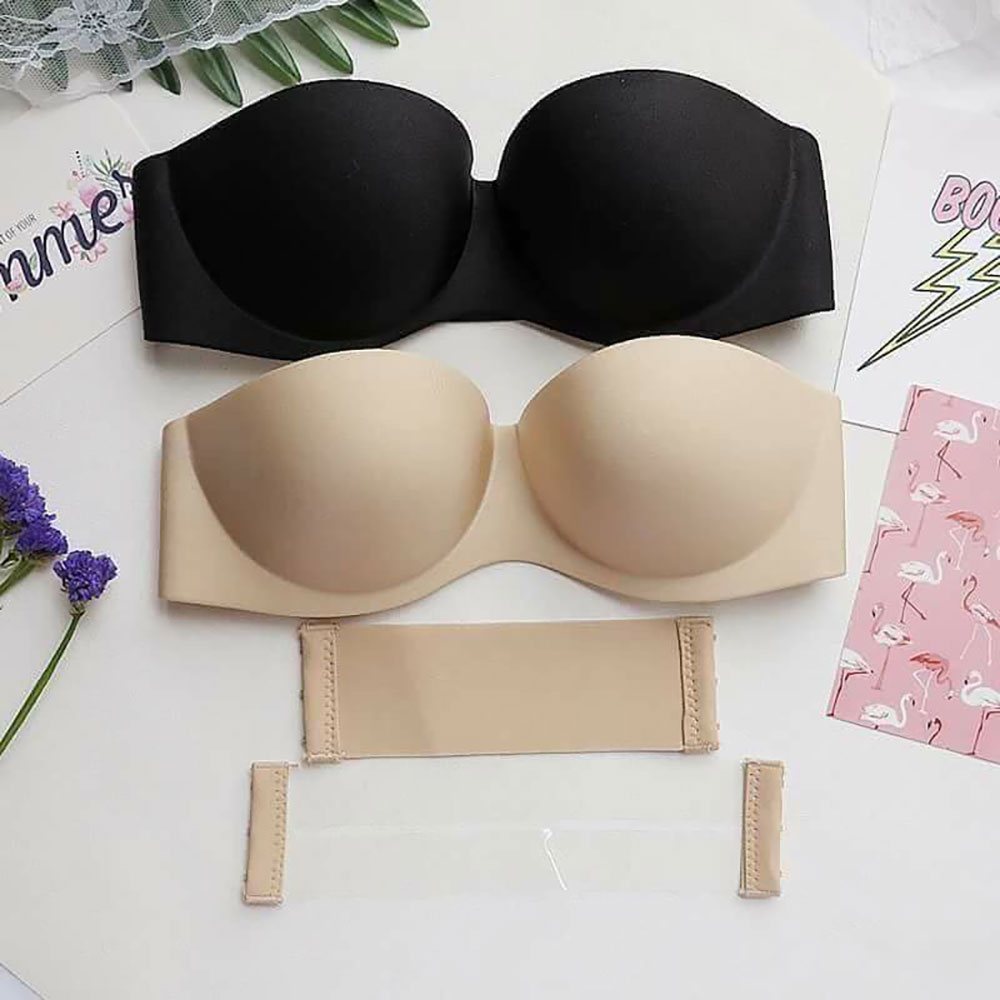
With the most modest ao yem designs, which only reveal the shoulders and do not have very deep side cutouts, you only need to choose a strapless bra. You should avoid using transparent bra straps because even when colorless, they are easily visible and ruin the grace of the bare shoulders. Instead, opt for a high-quality push-up bra.
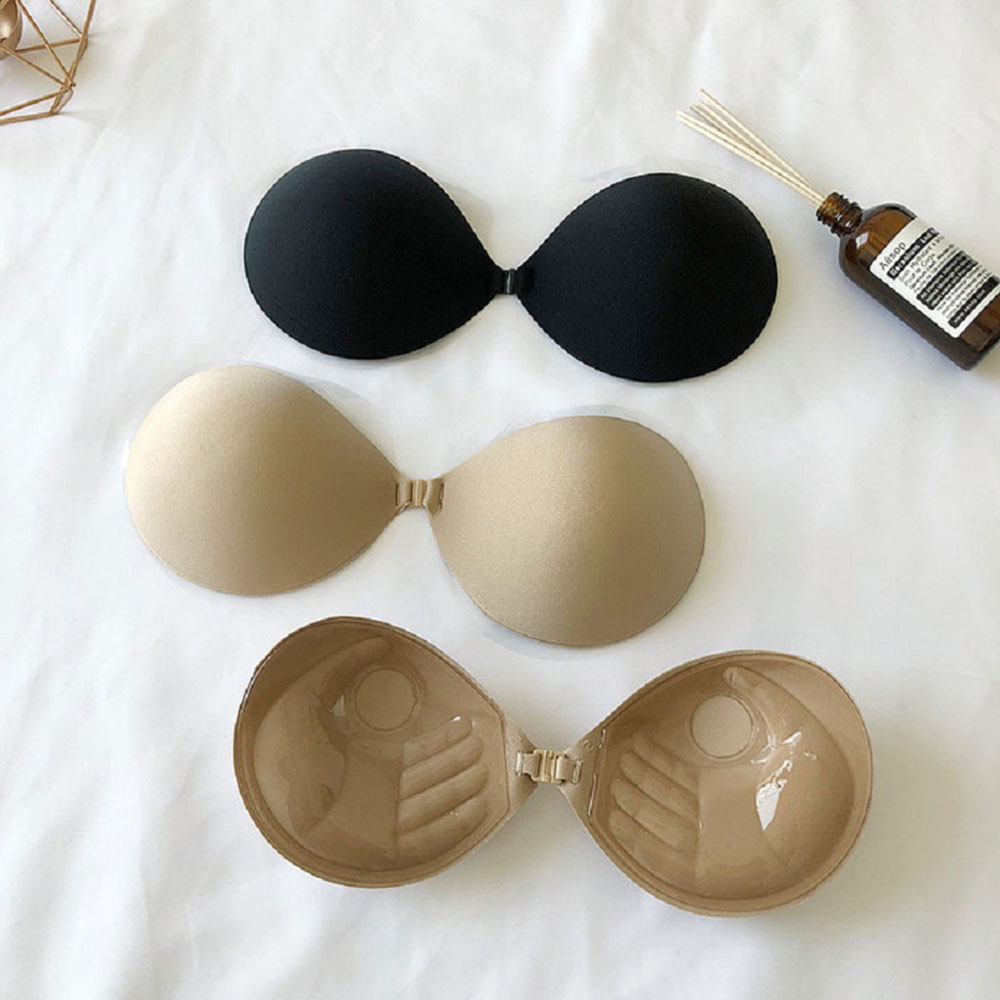
For daring, deeply-cut, or backless ao yem designs: adhesive nipple covers are your best friend. You can use simple nipple stickers or adhesive bras that offer more coverage, as shown in the photo above.
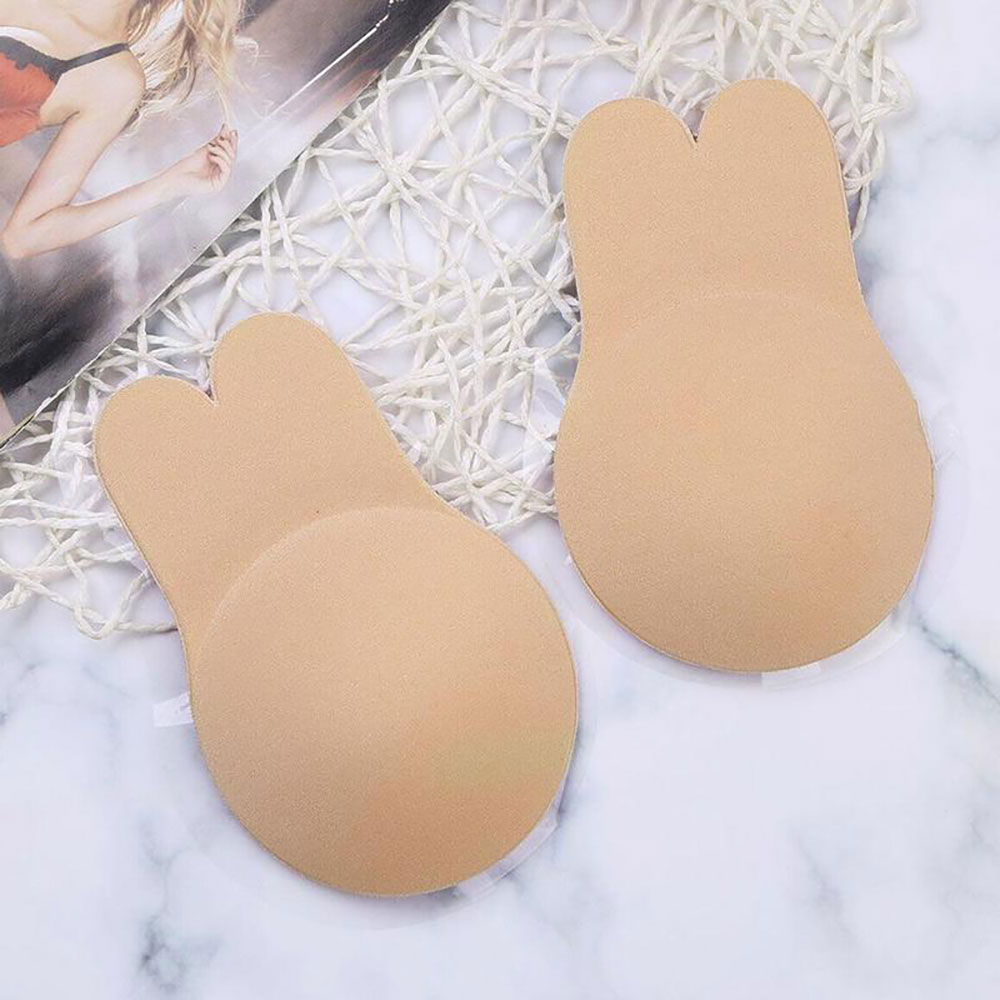
Feeling that your breasts sag when using adhesive bras? Choose the "bunny ear" style. The "ears" function to lift the nipple, providing better support than regular nipple stickers.
Using fashion tape
Sometimes when you lean forward, a loose ao yem might gape at the sides. A way to mitigate this risk is to carefully apply fashion tape along the edges of the yem on both sides of the chest. This method allows you to wear the ao yem confidently when out and about without fear of it shifting.
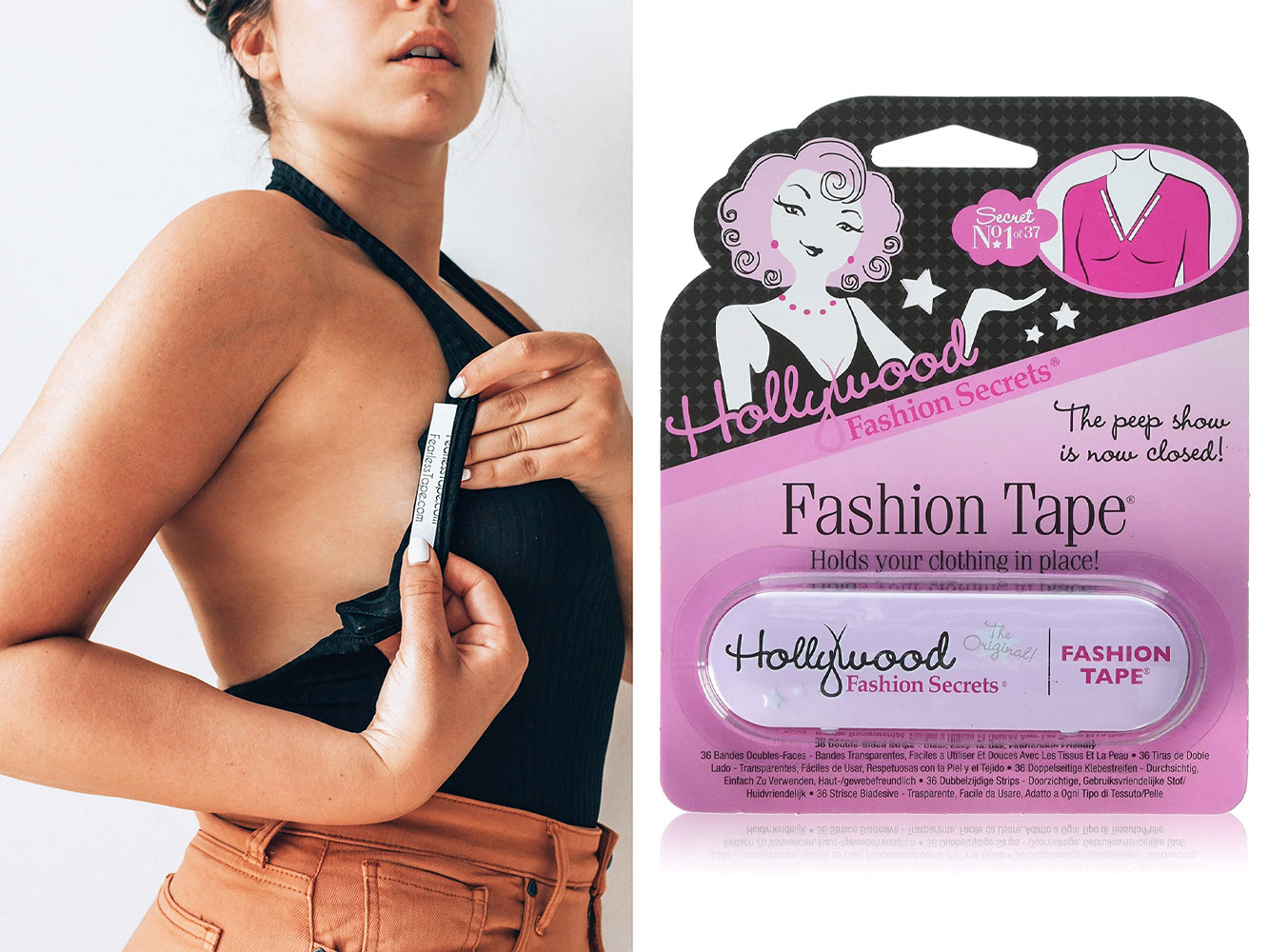
Photo: Amazon
The ao yem is no longer just associated with the rustic wrap-around skirt. Today, there is more than one way to bring a modern breath to this charming garment.
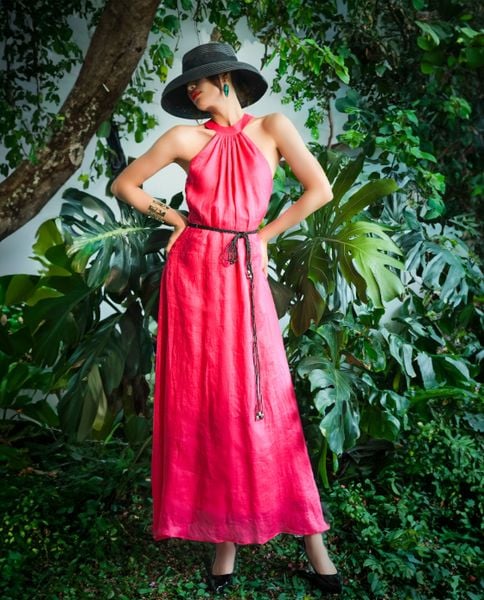
First, change the material. An innovated ao yem does not necessarily have to be sewn from soft, clingy silk. Don't be afraid to experiment with this sweet style using fabrics with more structure, such as brocade or taffeta. Not only does this bring novelty, but these materials also create a distinct silhouette for the innovated ao yem.
Another way is to mix materials and styles when wearing an ao yem. An ao yem worn with slim-fit jeans creates a rugged, earthy feel. An ao yem paired with an A-line tulle or mesh skirt brings a gentle, feminine touch. Or, adapt traditional designs into something new, such as a flared dress with an ao yem bodice.
Source: bazaarvietnam
0 comments